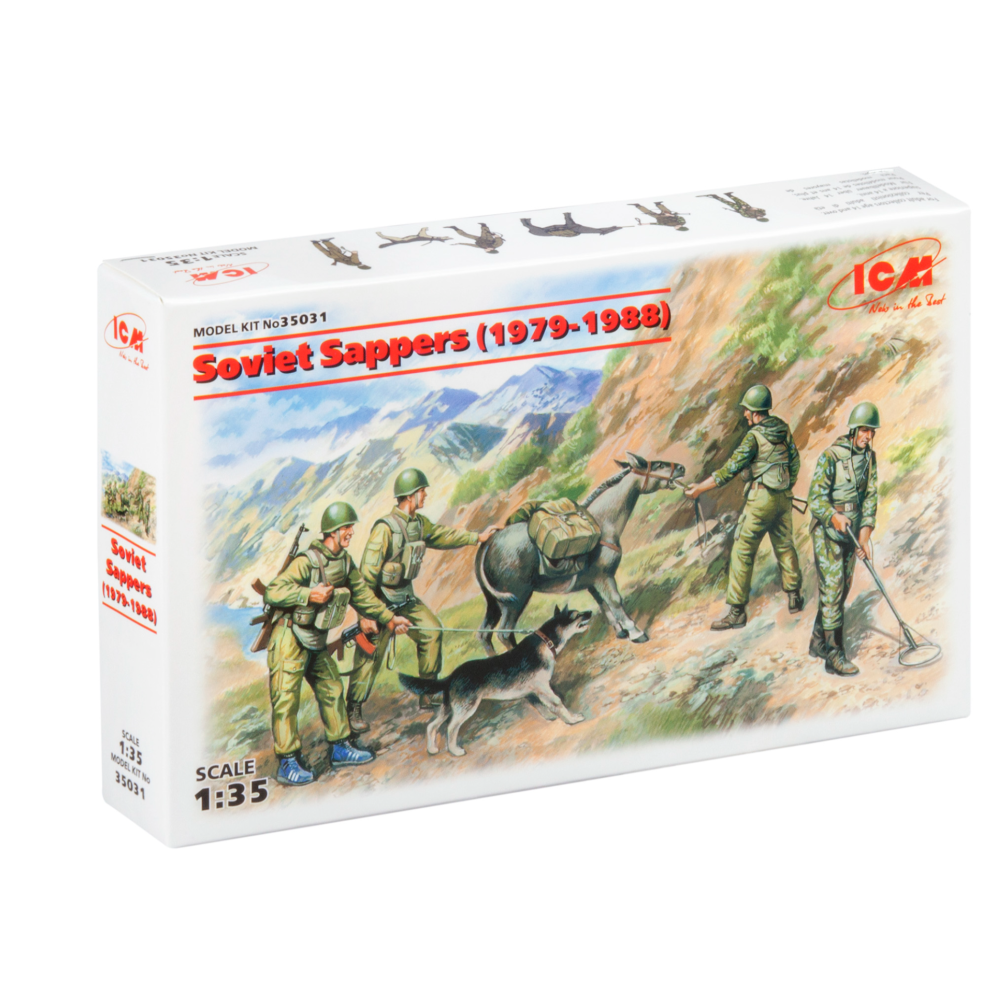
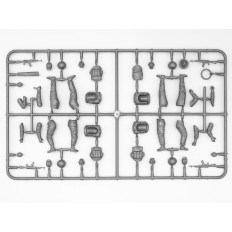
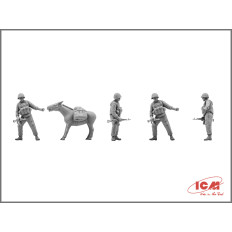
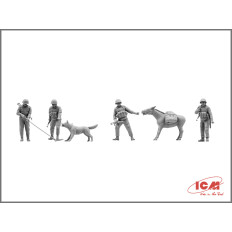
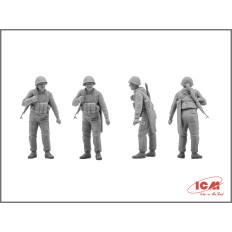
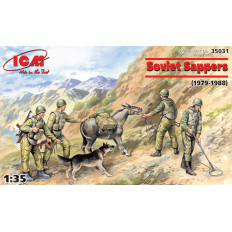
The war in Afghanistan, also known as the Soviet intervention in Afghanistan, took place from 1979 to 1989. The parties involved in the conflict were the communist government of Afghanistan, which was extensively supported by the USSR, and the partisan (mujahideen) forces, who opposed the Soviet intervention and the far-reaching secularization and atheization of the country. The mujahideen relatively quickly received broad, albeit unofficial, support from the United States. It is estimated that the Soviet side simultaneously involved about 100,000–120,000 people in the conflict, while determining the number of mujahideen is very difficult—most often, however, it is assumed that they had a numerical advantage over the Soviet troops. The direct cause of the conflict was the USSR's desire to increase its role in Central Asia and, most importantly, to expand its influence in Afghanistan. The Soviet troops fighting in this war were part of the so-called Limited Contingent of Soviet Forces in Afghanistan, mainly composed of the 40th Army. It should be noted that at the very beginning of the war, the Soviet army involved about 81,000 people, around 2,400 armored vehicles (including tanks), and about 500 aircraft in the conflict. Over time, these forces increased significantly. The war in Afghanistan, like the Vietnam War, was a classic example of guerrilla warfare, which also took place in terrain decidedly unfavorable for the Soviet troops. Moreover, Soviet soldiers were poorly trained to conduct such an asymmetric conflict. Soviet equipment and doctrine, designed for full-scale conflict in Central and Western Europe, did not always work. In the end, the war ended with the defeat of the Soviet Union, which suffered a huge and prestigious loss. It is also believed that the war accelerated the collapse of the Soviet Union. The Soviet army is also estimated to have lost about 65,000–70,000 wounded and killed.


 Русский
 Latvija
 English