In cooperation with *Swedbank Latvia*, our online store scalestar.eu has integrated modern payment methods. Now you...
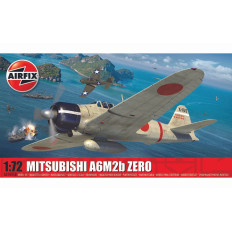
Mitsubishi A6M Reisen (also known as Zero or Zeke) is a Japanese single-engine all-metal low-wing aircraft from World War II
In the online store scalestar.eu, you can buy model kits of military aircraft for modeling and collecting. The category features fighters, bombers, and attack aircraft from various eras—from World War II to modern aviation
Mitsubishi A6M Reisen (also known as Zero or Zeke) is a Japanese single-engine all-metal low-wing aircraft from World War II
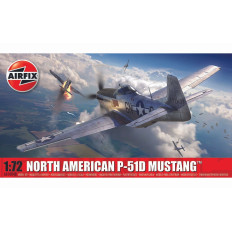
The North American P51 Mustang is viewed as one of the iconic American fighters of the Second World War. Designed to an RAF specification, the Mustang was transformed once the Rolls Royce Merlin engine was installed.
Its long range and excellent firepower made it a superb escort fighter, able to protect the bombers all the way to Berlin and back. After the war, the P51 saw service in Korea and was used by some air arms up until the early 1980s.
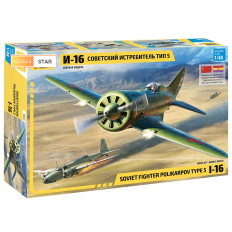
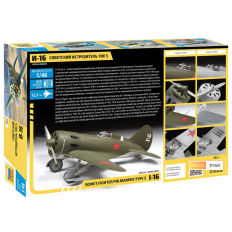
Zvezda 1:48 Soviet fighter Polikarpov I-16 Type 5
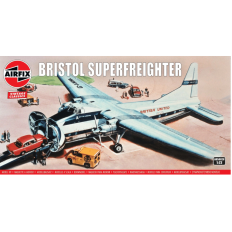
The Bristol Superfreighter was designed in 1952 as a development of the Bristol Freighter to meet the requirements of the car ferry services, carrying cars and their passengers across the English Channel. By 1954 there were Silver City Airways services between Southampton-Cherbourg and Lympne-Ostend.
In 1963 Silver City was amalgamated with other operators to form British United Air Ferries still using the Superfreighter. Cross Channel car ferry services came to end in the late 1960s when cheaper sea ferry services became more popular.
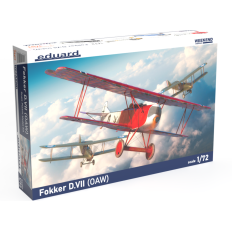
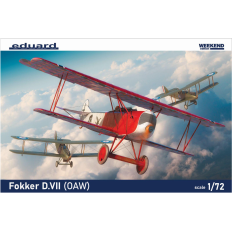
Weekend edition kit of German WWI fighter aircraft Fokker D.VII in 1/72 scale.
The kit is focused on aircraft built by OAW factory.
The Fokker D.VII was one of the most formidable fighters of WWI, praised for its maneuverability, climb rate, and rugged construction. The OAW-built variants had subtle differences in cowling and markings, which Eduard captures with impressive fidelity.
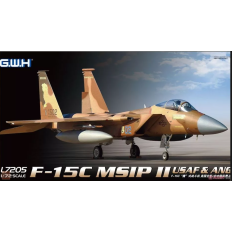
The McDonnell Douglas F-15 Eagle is an American twin-engine, all-weather fighter aircraft designed by McDonnell Douglas (now part of Boeing). Following reviews of proposals, the United States Air Force (USAF) selected McDonnell Douglas's design in 1969 to meet the service's need for a dedicated air superiority fighter. The Eagle took its maiden flight in July 1972, and entered service in 1976. It is among the most successful modern fighters, with 104 victories and no losses in aerial combat, with the majority of the kills by the Israeli Air Force.
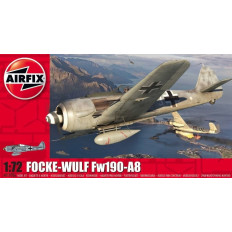
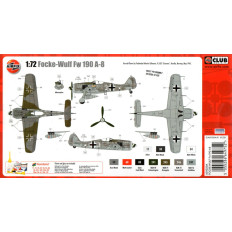
The Focke-Wulf Fw-190 is a German single-engine, all-metal fighter with an enclosed cockpit in a low-wing configuration from World War II
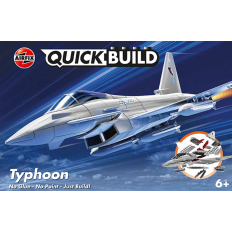
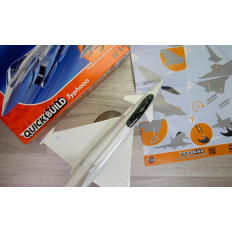
Develop your collection and add this slick, swift and streamlined aircraft model. This model has a total of 27 parts with 3 additional parts for the stand. The height of the model when placed on the stand is 129 mm. Airfix QUICKBUILD is an exciting range of simple, snap together models suitable as an introduction to modelling for kids (ages 5 and up), or as a bit of construction fun for the more experienced modeller.The pre-coloured pieces simply push together, without glue or paints, to build an impressive model which can then be decorated with the included self-adhesive stickers. Plane models also come with their own display stand to show off your handiwork!
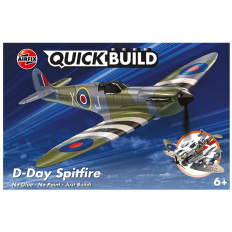
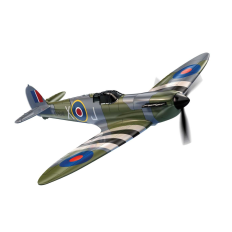
The iconic Spitfire not only helped to defend the skies of Britain during the Battle of Britain, but carried on to take the war to the enemy leading up to June 6th 1944 - D-Day. This new Airfix QUICKBUILD version comes with the famous D-Day stripes (to avoid friendly fire) and when built has a rotatable propeller, and though built with a brick system, is finished with the beautiful clean lines beloved by all that see it. This model has a total of 34 parts with 3 additional parts for the stand. The height of the model when placed on the stand is 116mm.
NEW DECAL EDITION - SUPER DECAL SHEET FOR 4 VERSIONS - COLOR INSTRUCTION SHEET
FIGURES NOT INCLUDED
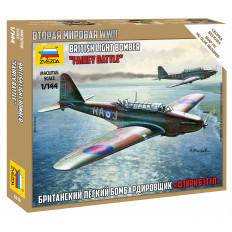
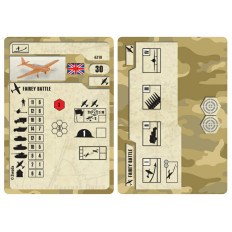
The first flight of the Fairey Battle took place on March 10, 1937. The aircraft turned out to be unsuccessful—too heavy and slow. During the campaigns of the 1940s, many Battles were lost. The British Air Force command withdrew all these aircraft from combat units in November 1940. Until they were decommissioned, the planes served in training centers in Canada and Australia.
A set of plastic parts for assembling one model airplane.
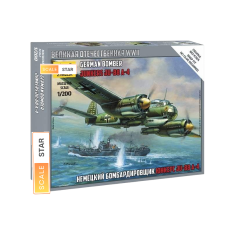
The JU-88 made its first flight at the end of 1936. The aircraft was only adopted by the Wehrmacht in August 1939. The machine was complex to produce, but very promising.
The aircraft could reach speeds of up to 450 km/h, was capable of dive bombing, and could also conduct aerial reconnaissance while remaining out of reach of enemy fighters.
The high-speed, high-altitude bomber of the new generation became an unpleasant surprise for the British Air Force; however, during the Battle of Britain, many of these aircraft were destroyed by British fighters and air defense units.
By the end of the war, the Luftwaffe had fighter-bombers, torpedo bombers, dive bombers, and even some flying bombs based on this aircraft.