

 Русский
 Latvija
 English
Do you want to purchase Gaahleri airbrushes, compressors, or Kaleido Colorworks paints? Now you can pre-order all of...
SIA Scale Star Registration number: 44103140795 VAT LV44103140795 LV SEPA identifieri: LV23ZZZ44103140795 Registered address: Rīga, Mazā Krūmu iela 18 - 23, LV-1069 Phone +371 27219799 e-mail info@scalestar.eu 




Most View Product
Most View Product

Meng Model 1:35 German...
€17.00

- -€5.00
Meng Model TS046 1:35...
€45.00
Regular price
€50.00

- -€5.00
MiniArt 35380 U.S. ARMY...
€44.55
Regular price
€49.55
Latest News
-
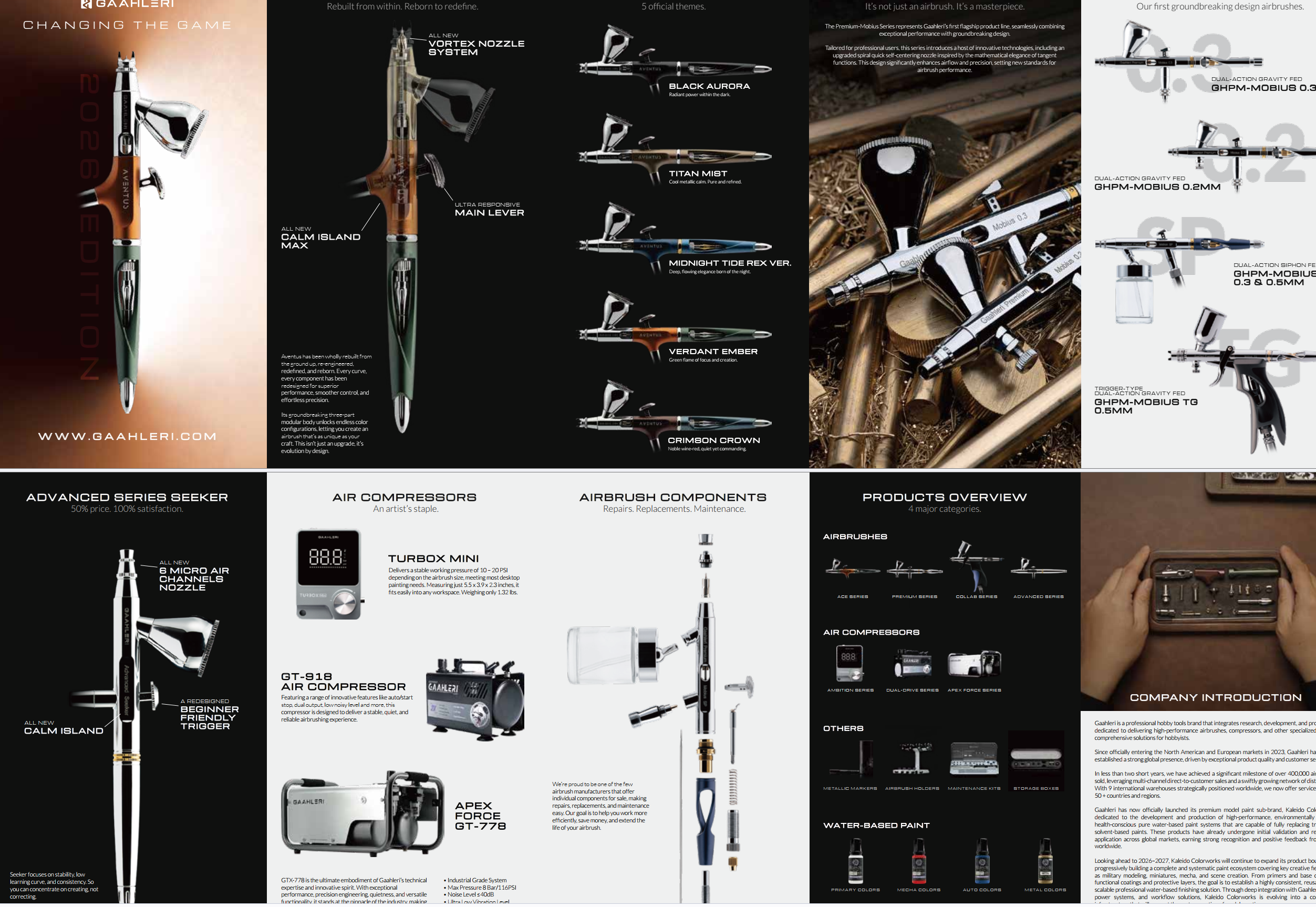 GAAHLERI & KALEIDO — available for pre-order with us!Read more
 -
 Fast and secure payments for your convenienceRead more
In cooperation with *Swedbank Latvia*, our online store scalestar.eu has integrated modern payment methods. Now you...
-
 Overview of WMC Models products, Paper Models section.Read more
Our website features products from the manufacturer WMC Models. Link to the YouTube channel where you can learn more...
-
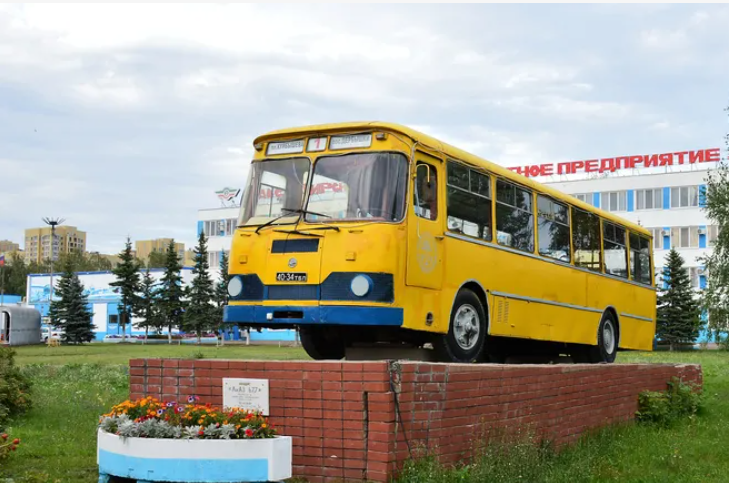 LiAZ-677: The History of the Beloved Soviet BusRead more
Some affectionately called it the "moon rover" for its characteristically soft suspension on air bellows, while for...
-
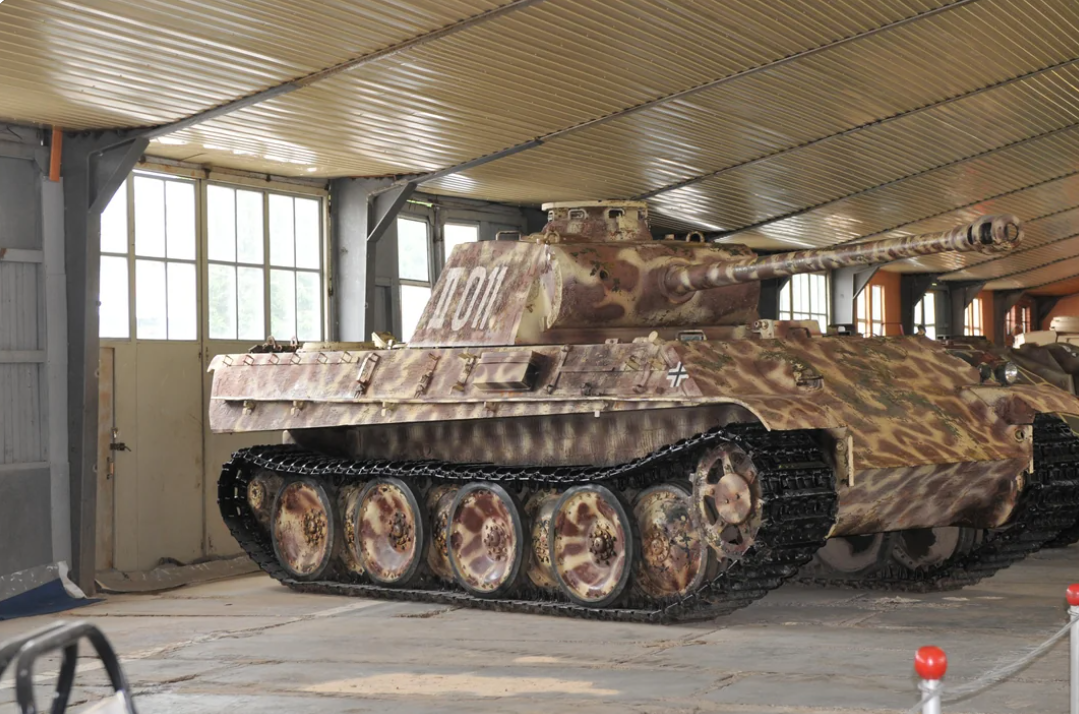 Panther Ausf.A Early – A WWII Legend in ScaleRead more
The Panther was Germany’s most important medium tank of World War II, designed in response to the Soviet T‑34...
-
 Tools needed for assembling scale modelsRead more
Building scale models is an engaging and creative hobby that requires a specific set of tools to achieve the best...
Blog categories
Search in blog
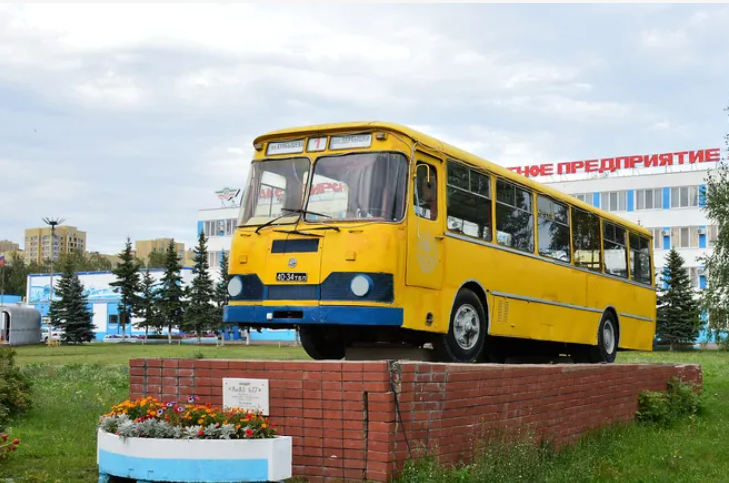
LiAZ-677: The History of the Beloved Soviet Bus
Buses, popularly nicknamed "cattle trucks," could be found in almost any Soviet city where there was at least minimal bus service—urban or suburban. The vehicles were equipped with a fuel-hungry gasoline engine that easily consumed 50–60 liters per 100 kilometers.
Because the engine was located in the front, the cabin almost always retained noticeable warmth. In winter, it was really hot inside, and in summer, the temperature would rise to nearly tropical levels. Moreover, the hot air often mixed with the smell of exhaust — this design feature was a constant presence.
The history of the LiAZ-677 bus
The story of the bus that later became almost a symbol of Soviet cities began quite typically for that era: even at the prototype stage, the vehicle already looked somewhat outdated. The first prototype was assembled in Likino-Dulyovo in 1962, and for those times it seemed like a real technological breakthrough. A huge passenger compartment designed for about 110 people, wide accordion doors, a massive seven-liter V8 gasoline engine with 180 horsepower, an automatic transmission—the first ever for domestic buses—a power steering system from the Ural-377, a sturdy Hungarian RABA-MAN axle, and an air suspension with a solid supply of components.
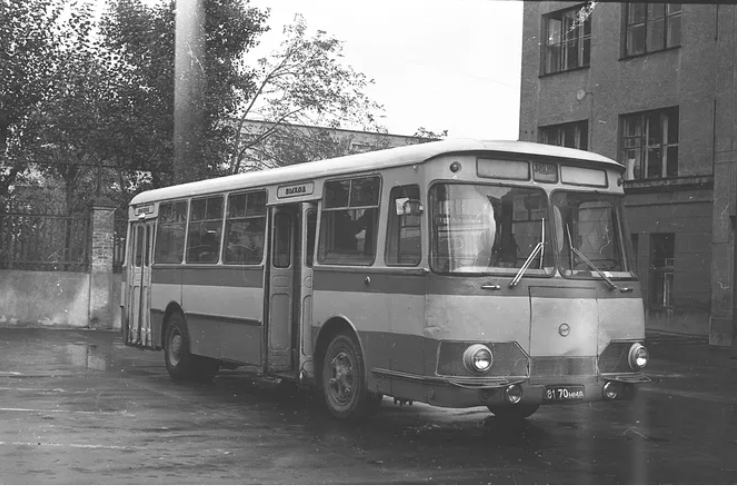
A distinctive feature of the LiAZ-677 bus was its characteristic design with large windows and round headlights
With this set of components, the vehicle could accelerate up to 70 km/h, although the engineers optimistically marked the speedometer scale up to 120. For urban transport, this was more than respectable.
However, bureaucratic approvals and finalizing the design dragged on for years. It was only by 1968 that small-scale production was established, and a full-fledged assembly line started operating only in the summer of 1970. By that time, the LiAZ-677 no longer seemed like a technological marvel: high floors and a gas-guzzling gasoline engine were considered relics of the past by the late 1960s.
Nevertheless, there was little to compare it with in the USSR, so the first production model, shown at VDNH, was awarded a medal at the exhibition. In the 1970s, the factory gradually increased production, and by the time manufacturing ended in 1994, the total number of "lunokhods" produced had approached two hundred thousand.
Despite numerous structural weaknesses, the bus turned out to be surprisingly durable. Production ceased in the 1990s, but the last unit was decommissioned only in 2015—an impressive service life for a city vehicle. However, this longevity came at the cost of certain characteristic "symptoms": that very gurgling sound, nicknamed the "clinking of empty bottles," was a result of worn transmission components.
The gearbox in the 677 was separate from the engine, located under the floor by the first door, and was connected to the engine by a long driveshaft. The bearings and joints wore out quickly, but they tried to replace them as little as possible. As a result, the shaft would start to vibrate and knock even at idle.
The suspension, intended to be progressive, in reality turned the bus into something like a roly-poly toy. With a light load, the rear part would sway especially eagerly on uneven surfaces. In 1972, the design was upgraded, replacing the pneumatic system with air springs, but this did not fundamentally solve the problem. And the exhaust system, which ran under the floor, eventually began to leak exhaust directly into the cabin—the smell became a constant companion for both passengers and drivers.
The torque converter, which was once considered an advanced solution, also caused quite a few problems. Transmission losses were enormous, the engine overheated, and it consumed 76-octane gasoline in completely indecent amounts.
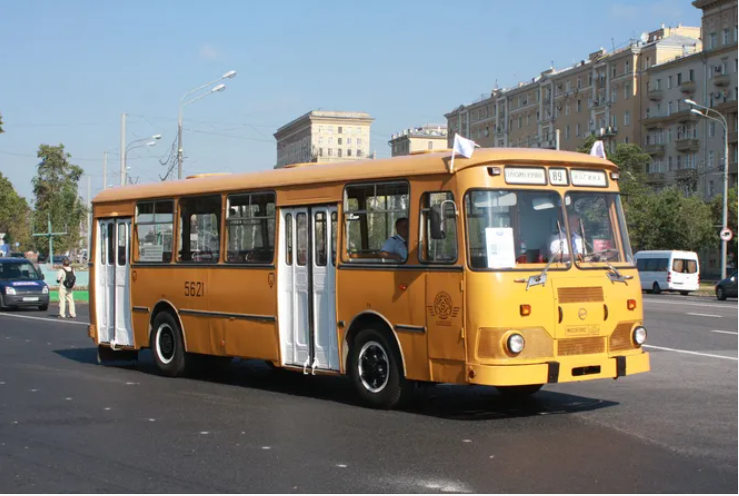
Despite the fact that production of the LiAZ-677 was discontinued back in 1994, many buses continue to operate in Russia and other CIS countries, thanks to their reliability and ease of maintenance.
The bus had a hard time climbing hills: sometimes drivers had to let people off before a steep slope, and occasionally even the passengers themselves helped push the vehicle up. And yet, despite all its oddities and shortcomings, the LiAZ-677 remained a favorite—just as contradictory as much of everyday Soviet life. It was far from perfect, but it was always awaited.
Why the bus was called a 'cattle truck'
Among the people, the LiAZ-677 quickly acquired two vivid nicknames—“moon rover” and “cattle truck.” The first appeared thanks to its characteristic smooth ride: the soft suspension made the trip so even that it seemed as if the bus wasn’t driving, but slowly gliding above the road. The second nickname arose because of the specifics of the interior. Officially, there were only 25 seats, but the design allowed up to 110 people to be crammed inside, and the overwhelming majority of them had to stand.
This 'margin of safety' made the 677 incredibly spacious—it carried three times more passengers than many other city buses of that time. Despite all its shortcomings, the vehicle was in demand: it provided a fast and cheap way to get from point A to point B in growing cities. But those who had to ride it during rush hour remembered well that when fully loaded, the atmosphere inside became almost 'barn-like'—cramped, stuffy, and heavy.
How the LiAZ-677 was modified
Work on the improved version of the famous "lunokhod"—the LiAZ-677M bus—was included in the experimental design work plan as early as 1973. However, real progress began only towards the end of the ninth five-year plan, when engineers prepared the technical project and assembled the first two prototypes. One of them was equipped with an experimental pre-chamber torch-ignition engine, the ZIL-375YAF, which in itself was a bold step for a city bus.
In 1976, both prototypes successfully passed the acceptance tests. Based on the department's comments, a third experimental model appeared in 1977, after which the documentation was handed over for production. The factory produced two small industrial batches: ten vehicles in 1977 and twenty-five in 1978. Interestingly, buses from different years differed from each other in many small details: doors, over-door elements, radiator hatches, marker lights, and front-end design. The batch planned for 1979 remained only on paper.
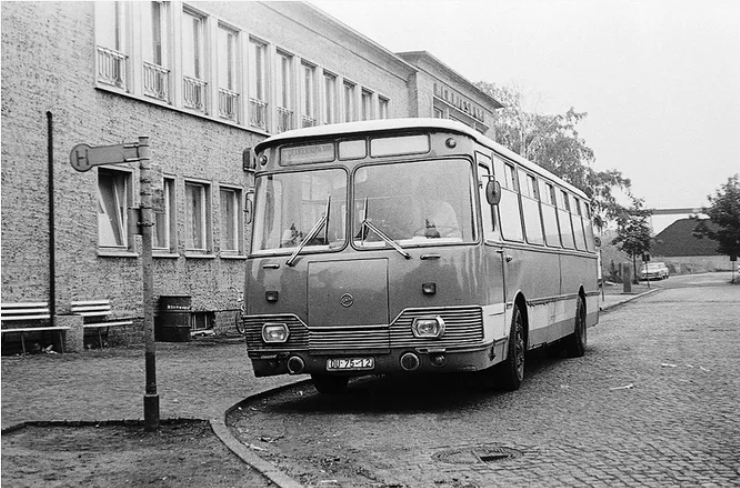
The LiAZ-677 was produced in 1960, and its modification, the LiAZ-677M, only in 1978.
Suburban and climate modifications
The LiAZ-677V was created specifically for suburban routes. It featured a four-row seating arrangement, the rear standing area was removed, the floor was leveled, and ventilation hatches were added to the roof. The spare wheel could be placed anywhere—under the floor, at the rear, or even inside the cabin. This bus could accommodate 67 people, 35 of whom were seated. Production ran from 1973 to 1978, after which the model was replaced by the modernized LiAZ-677MV version, which was produced until 1994. The cost of the vehicle was 15,730 rubles.
The LiAZ-677A was designed for operation in harsh climates — from minus sixty to plus forty degrees. It received an insulated body and a four-row seating arrangement. The first prototype appeared in 1967, and mass production began a year later. In 1982, this modification was replaced by the updated LiAZ-677MS version, created on the basis of the 677M. The main difference is double glazing. Capacity increased to 74 people, although the number of seats decreased — only 29.
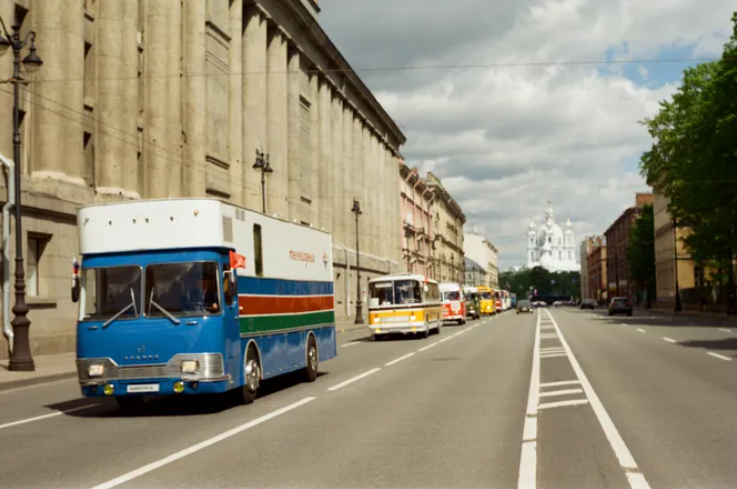
The LiAZ-5932 'Magnolia' was presented at the bus parade in 2006 Wikipedia
It is worth mentioning separately the KAvZ-3100 'Sibir'—a shortened version for cold regions. It never made it to the assembly line.
Specialized versions
LiAZ-677 had many modifications, each of which served its own purpose.
LiAZ-677V (excursion) — a bus with a single door, convenient for organized boarding and disembarking. More comfortable seats and a separate place for a guide were installed inside.
LiAZ-677P (apron) — a rare version with two doors on both sides of the body. It could carry up to 110 people, but there were only ten seats. Only three such vehicles were built.
LiAZ-677G (gas-cylinder) ran on liquefied petroleum gas. The 118 kW engine provided good dynamics, and externally the bus was almost indistinguishable from the regular 677—except for the gas cylinders on the roof, which revealed its special feature.
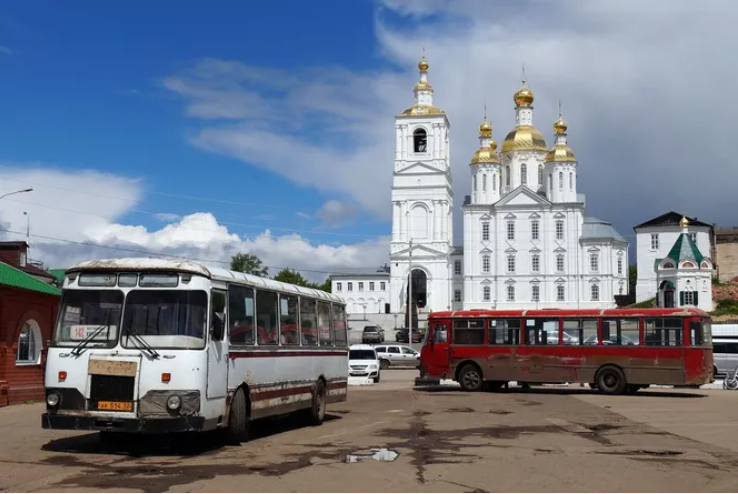
The LiAZ-677 bus is still used in Arzamas
Mobile TV studio based on LiAZ
A special place is occupied by the LiAZ-5930, known as the PTS-CT "Lotos." This was not just a bus, but a fully-fledged mobile television station. The body was made of all-metal panels, had two doors—side and rear—and was equipped with retractable stairs. Inside, there were air conditioners, a heating system, video recording equipment, work desks, tripods, cabinets, and portable seats. Telephones and control panels were installed for communication with the editorial office. Depending on the configuration, the "Lotos" could serve both black-and-white and color television broadcasts.
This vehicle has become an indispensable tool for television crews, allowing them to quickly move between filming locations and work in comfortable conditions.
How did the production of the bus stop?
In the 2000s, the LiAZ-677M gradually disappeared from city streets: the buses were considered morally outdated, economically unprofitable, and poorly compatible with modern automated fare collection systems. The first major cities to abandon these buses were Moscow and Kyiv—their operation ended there in 2004. Then others followed suit: in Orekhovo-Zuyevo, the last run took place on December 13, 2005; in Saint Petersburg—on April 1, 2006 (although they had not been in regular service since July 2005). In Petropavlovsk-Kamchatsky and Elektrostal, the "moon rovers" disappeared from routes in 2006, and in Minsk and Krasnoyarsk—in 2007. Yekaterinburg, Omsk, and Lipetsk said goodbye to them in 2008, Kirov, Ryazan, and Yelets—in 2009. Dankov, Rybinsk, and Samara ended their operation in 2010.
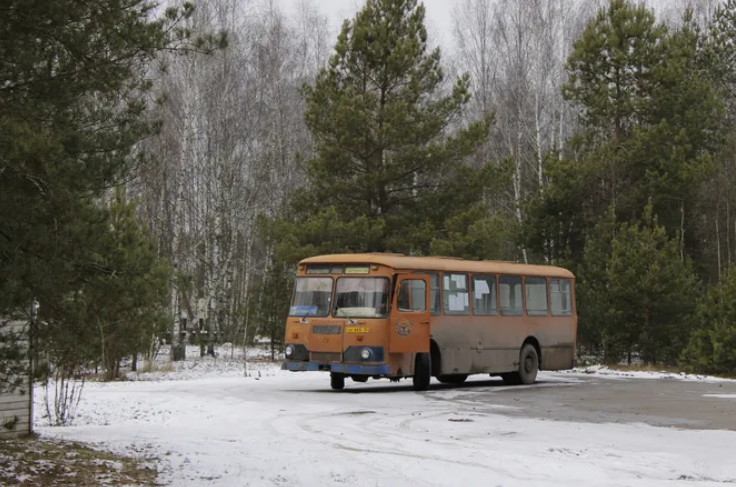
One of the last LiAZ-677M buses in Bryansk Oblast in 2020
By the end of 2020, the largest number of surviving LiAZ-677 buses, including various modifications, was in Krasnokamensk, Zabaykalsky Krai. However, even there, as of October 1, 2020, they stopped operating on the routes. One of the few cities where these buses continued to operate regularly was Zelenogorsk, Krasnoyarsk Krai — there were 19 active vehicles there.
In Amursk, the last LiAZ-677 buses were taken off the routes in 2020 and, according to the local PATP, decommissioned. Nevertheless, individual buses of this model continue to operate in small towns: eight vehicles are in service in Oleksandriia, Ukraine; two each in Arzamas, Nizhny Novgorod Region; Volgodonsk, Rostov Region; and Rudny, Kazakhstan. In May 2022, what was likely the last operating LiAZ-677M in Russia was spotted in Amursk.
Posted in:
Default category
Related posts
-
 Tools needed for assembling scale modelsBuilding scale models is an engaging and creative hobby that requires a specific set of tools to achieve the best...Read more
 -
Panther Ausf.A Early – A WWII Legend in ScaleThe Panther was Germany’s most important medium tank of World War II, designed in response to the Soviet T‑34...Read more
-
Overview of WMC Models products, Paper Models section.Our website features products from the manufacturer WMC Models. Link to the YouTube channel where you can learn more...Read more
-
Fast and secure payments for your convenienceIn cooperation with *Swedbank Latvia*, our online store scalestar.eu has integrated modern payment methods. Now you...Read more
-
GAAHLERI & KALEIDO — available for pre-order with us!Do you want to purchase Gaahleri airbrushes, compressors, or Kaleido Colorworks paints? Now you can pre-order all of...Read more
Leave a comment