List of products by brand Zvezda

Zvezda is the leading manufacturer of  scale models and board games since 1990.

Zvezda is the leading manufacturer of  scale models and board games since 1990.

Active filters

Zvezda Soviet heavy tank IS-4

IS-4 is a Soviet heavy tank that was adopted into service in April 1946. It was mass-produced from 1947 to 1949. For the mid-1940s, the tank had excellent armor protection. At the time it was adopted, no tank gun could penetrate it from a distance of 1,000 meters. One of the features of the vehicle was its original ammunition stowage. In the IS-4, shells were placed in special metal cassettes.

€5.95
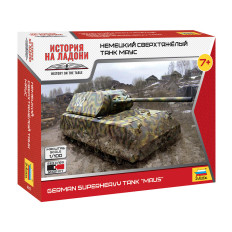
Zvezda German super-heavy tank Maus

A model of the German super-heavy tank "Maus" in 1/100 scale will be a worthy addition to any collection of miniature armored vehicles. The appearance of the model precisely matches the prototype, and the carefully engineered parts, created using the latest technologies, fit together perfectly. As usual, this model is assembled with a "snap-fit" method, so no glue is required during assembly.

€5.95
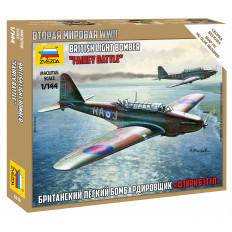
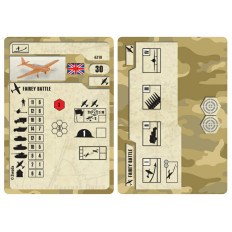
Zvezda 1:144 British Light Bomber Fairey Battle - Snap Fit

The first flight of the Fairey Battle took place on March 10, 1937. The aircraft turned out to be unsuccessful—too heavy and slow. During the campaigns of the 1940s, many Battles were lost. The British Air Force command withdrew all these aircraft from combat units in November 1940. Until they were decommissioned, the planes served in training centers in Canada and Australia.

A set of plastic parts for assembling one model airplane.

€7.00
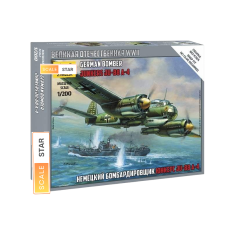
Zvezda 1:200 German bomber Junkers Ju-88A4 - snap-fit

The JU-88 made its first flight at the end of 1936. The aircraft was only adopted by the Wehrmacht in August 1939. The machine was complex to produce, but very promising.

The aircraft could reach speeds of up to 450 km/h, was capable of dive bombing, and could also conduct aerial reconnaissance while remaining out of reach of enemy fighters.

The high-speed, high-altitude bomber of the new generation became an unpleasant surprise for the British Air Force; however, during the Battle of Britain, many of these aircraft were destroyed by British fighters and air defense units.

By the end of the war, the Luftwaffe had fighter-bombers, torpedo bombers, dive bombers, and even some flying bombs based on this aircraft.

€7.00
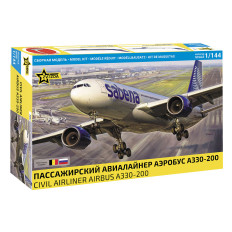
Zvezda 1:144 Civil airliner Airbus A330-200

The twin-engine wide-body passenger airliner Airbus A330-200 was created to replace the A300-600R. It first took to the skies in 1997. Compared to the A330-300 variant, the airliner received a shortened fuselage designed to carry up to 253 passengers and an enlarged fin. By reducing the flight weight, the range increased to 13,450 km. The high flight and economic performance of the A330-200 allowed it to successfully compete with the Boeing 767. Production aircraft are equipped with Rolls-Royce and Pratt & Whitney engines and are used by dozens of airlines around the world.

€38.00
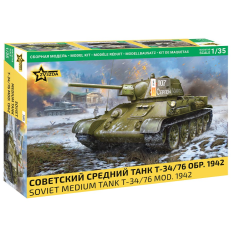
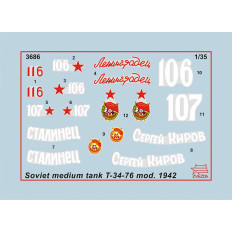
Zvezda 1:35 Soviet medium tank T-34/76 mod. 1942

This model represents the T-34 tank, developed at the Ural Tank Plant No. 183 (Nizhny Tagil) at the end of 1942. The tank's turret had a new, improved regular hexagonal shape, which earned it the nickname "hexagonal" or "nut turret." The new turret featured a larger internal volume but remained cramped and still accommodated only two crew members. Its main armament was the 76-mm F-34 gun.

Since the end of 1942, a new five-speed gearbox with constant mesh gears began to be installed on the T-34. This modification remained on the assembly line until the spring of 1944. A total of about 20,000 units were produced.

€25.00
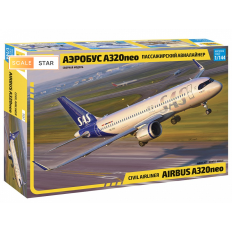
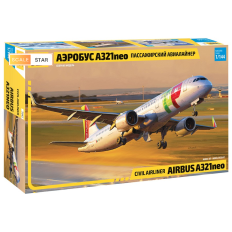
Zvezda 1:144 AIRBUS A 320 NEO

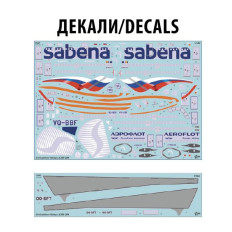
The passenger airliner Airbus A320neo is a modification of the highly popular narrow-body A320 model. The aircraft made its first flight in September 2014. Unlike the A320, it has a capacity of up to 195 passengers. In terms of overall design, the A320neo is similar to the base A320, but the main difference between the new aircraft and the previous generation is its more powerful and fuel-efficient engines. These engines provide reduced fuel consumption and increased flight range for the airliner. Additionally, thanks to them, the new aircraft is the quietest in its class. The new modification of the aircraft is equipped with Sharklets—Sharklet wingtip devices—which improve the aircraft’s aerodynamic performance.

€22.00
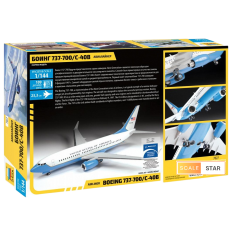
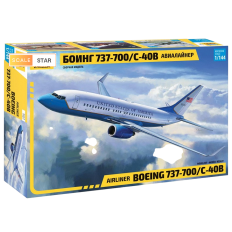
Zvezda 1:144 BOEING 737-700 C-40B

The Boeing 737-700, as a representative of the "Next Generation" series of airliners, is a typical example of a narrow-body, twin-engine passenger aircraft. The plane was designed as a replacement for the previous version, the Boeing 737-300. It features modern technical specifications and is intended for short- and medium-haul flights. The prototype Boeing 737-700 made its first flight on February 9, 1997. The aircraft is equipped with a crew rest cabin, business class seats with work tables, and sleeper cabins for passengers.

€22.00
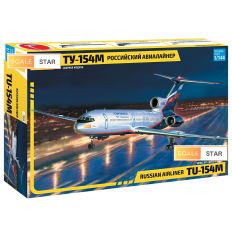
Zvezda 1:144 TU-154M

The medium-range passenger aircraft Tu-154M, developed by the A.N. Tupolev Design Bureau, has been produced in series since 1984. This airliner is one of the most widely used Russian passenger aircraft. The Tu-154M can carry up to 158 passengers over a distance of up to 3,500 km at a speed of 950 km/h. The Tu-154M is one of the few domestic passenger aircraft exported abroad. Hundreds of Tu-154M aircraft are operated daily by dozens of leading airlines in Russia and abroad.

€18.00
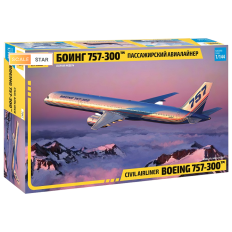
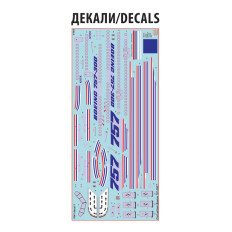
Zvezda 1:144 Boeing 757-300

The Boeing 757-300™ narrow-body passenger aircraft is an evolution of the Boeing 757-200™ model with increased passenger capacity. It accommodates from 243 to 280 passengers. The interior was designed with passenger feedback in mind. Thanks to their suggestions, the cabin was equipped with additional indirect lighting and enlarged overhead bins for carry-on luggage. During its production from 1998 to 2004, just over 50 Boeing 757-300™ aircraft were manufactured. Airlines have been operating these aircraft since 1999.

€26.08
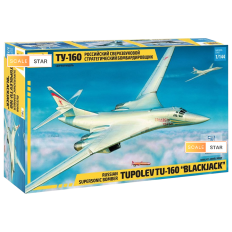
Zvezda 1:144 Russian supersonic bomber Tupolev Tu-160 Blackjack

The strategic bomber Tu-160 can strike targets located anywhere in the world with nuclear and conventional weapons. The first flight of the Tu-160 took place on October 6, 1984, when an aircraft equipped with the full set of serial bomber equipment took to the air. Thanks to its variable-sweep wing, the Tu-160 is capable of flying both at low altitudes, following the terrain, and at high altitudes (including at supersonic speeds). The features of its aerodynamic design, along with the implementation of a number of technical solutions, have made it possible to significantly reduce the radar visibility of the bomber. The Tu-160 is the largest serially produced combat aircraft in the world.

€22.00
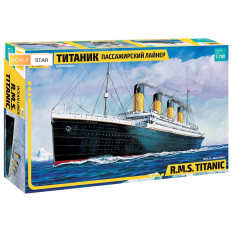
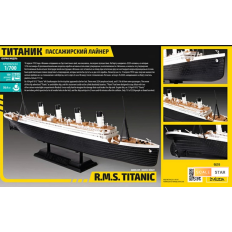
Zvezda 1:700 British passenger liner R.M.S. Titanic

On April 10, 1912, the Titanic set off from Southampton on what turned out to be its final voyage.

There were 2,224 people on board, of whom 1,316 were passengers. In its advertising campaign, the ship's owner actively promoted the claim that the Titanic was unsinkable, and it could not be called unfounded.

Thanks to its design, the Titanic could stay afloat even if two of its sixteen watertight compartments were flooded. It was truly difficult to imagine damage that could send this ship to the bottom.

Despite this, on April 15, 1912, after sustaining numerous small breaches due to a collision with an iceberg, the Titanic sank just 2 hours and 40 minutes after the collision. Of the 2,224 people on board, only 711 were saved.

€21.00